
A Caregiver Story That Refuses to Be Sad
Some movies about disability arrive with the violins already playing. The Fundamentals of Caring is not one of them. It premiered as the closing night film at Sundance in 2016, Netflix picked it up, and almost a decade later it still feels like a small discovery, the kind of movie somebody has to tell you about because the algorithm never will. That is how I found it, and it has stuck with me longer than most bigger films from that year.
Paul Rudd plays Ben Benjamin, a writer who has stopped writing. He is grieving a loss the film takes its time explaining, his marriage is over, and his estranged wife’s lawyer keeps trying to serve him with divorce papers he does not want to sign. So Ben does what people do when their own life has stalled out. He tries to be useful to somebody else. He signs up for a six-week caregiving course, learns the trade’s cheerful acronym, ALOHA (Ask, Listen, Observe, Help, and Ask again), and goes looking for his first client.
His first client has no interest in being anybody’s feel-good project.
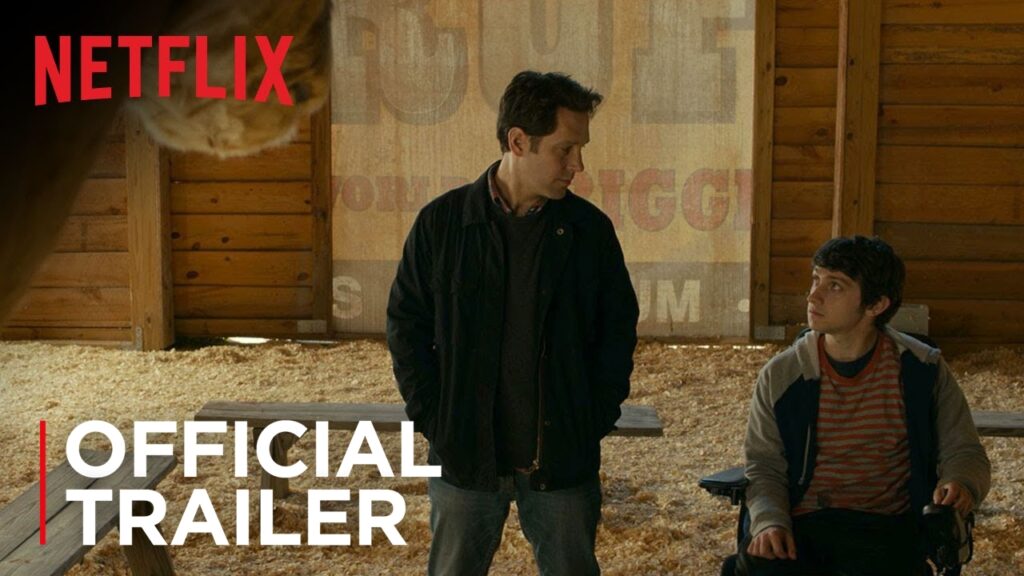
Trevor, played by Craig Roberts, is eighteen, sharp, funny, and relentlessly sarcastic. He has Duchenne muscular dystrophy, uses a wheelchair, and runs his days like a man defending a castle. Same food, same routine, same sarcastic commentary from the same spot in the same house, where he watches the local news and keeps a map of the country’s lamest roadside attractions, the kind of places most people drive straight past. At the top of his list sits the World’s Deepest Pit, which becomes his holy grail. His mother Elsa, played by Jennifer Ehle, hires Ben with the air of a woman who has interviewed a long line of people who could not handle her son, and expects Ben to join the list.
Two People Stuck in Different Ways
The trailer puts it better than most reviews did: one of them is paralysed emotionally, the other physically. Trevor can barely move, but he is the one who knows exactly who he is. Ben can go anywhere he wants, and he is the one who is completely stuck. That inversion is the engine of the whole film. Every scene where Ben tries to manage Trevor’s life, Trevor turns it around and starts managing Ben’s.
Roberts is the real find here. Trevor could so easily have been written as an inspiration poster, the brave kid who teaches the sad adult how to live. Instead he is rude, funny, frightened, and completely his own person. He orders food he will not eat just to make a point. He has a running routine about the things he will never do that is equal parts joke and armour. Rudd, to his credit, plays straight man to all of it. This is the quieter Paul Rudd, the one who lets somebody else get the laughs while his own character slowly thaws out.
Dot, Peaches, and the Open Road
Ben’s big idea, and it is not a very professional one, is a road trip. Trevor has spent eighteen years going nowhere, so Ben loads the van and points it at the map on Trevor’s wall. Along the way they pick up Dot, played by Selena Gomez, a runaway hitchhiker with her own escape plan and absolutely no patience for either of them feeling sorry for themselves. Gomez fits into the film’s rhythm better than you might expect. Dot does not soften Trevor, she argues with him like an equal, which is exactly what he has been missing.
Later they cross paths with Peaches, a very pregnant traveller whose storyline pushes Ben straight back into the one part of his past he has been running from. I will not spoil how that resolves, except to say the film earns its emotional moments by refusing to announce them. Nothing arrives with a swell of music. Things just happen the way they happen on the road, in a rest stop parking lot, while everybody is slightly unprepared.
What the Film Gets Right About Care
Here is the part that has stayed with me, and it is the reason this little Netflix film deserves more than a nostalgic rewatch. Strip away the road trip comedy and what is left is the real job behind one-to-one support in Alberta and everywhere else it is done well: not wrapping somebody in cotton wool, but knowing when to push, when to help, and when to get out of the way.
Watch how Ben’s training collides with Trevor’s actual life. The course taught him procedures. Trevor teaches him judgment. Good support, in the film and in real life, is not doing things for a person until they disappear from their own day. It is the opposite. It is transfers done safely, meals handled without a fuss, medication and routines kept straight, and then the harder skill, stepping back so the person you support gets to take the risks, make the choices, and have the experiences that make a life theirs. Trevor does not need a hero. He needs backup. There is a world of difference between those two things, and the film understands it in its bones.
That is the model serious support teams are built on. Organizations like Genesis Support Services provide exactly that kind of person-centred help across Alberta, supporting children, youth, adults, and seniors with complex needs in homes, schools, and community settings, one person at a time. The goal is never to take over. It is to make independence possible, and to be steady and reliable while somebody builds it.
Made for a Living Room, Not a Multiplex
This is also, fittingly for us, a perfect home theater movie in the old fashioned sense. Not a demo disc, not a surround sound workout. It is a dialogue film, and it lives or dies on faces, timing, and the space between two people in a van. Watched on a good screen with clean, clear sound, the small things land: Roberts’ deadpan delivery, the awkward silences Ben has to learn to sit in, a soundtrack that stays out of the way. Some films need seventy feet of screen. This one needs your full attention for ninety-seven minutes, and it rewards it.
The Fundamentals of Caring is based on Jonathan Evison’s novel The Revised Fundamentals of Caregiving, and director Rob Burnett keeps the adaptation loose, funny, and human. It is streaming on Netflix now. If it passed you by in 2016, fix that. And if somebody in your life does this work for real, as a support worker or as family, you will recognize more of this film than you expect to.